Providing a Smarter Way to Faster Growth
Flexible and data-driven sales & marketing solutions that deliver growth for your business.

We help brands connect with shoppers by driving sales growth through faster, smarter field teams.
CROSSMARK delivers data-driven field solutions that support sales growth for our clients. We get results by forming strategic partnerships built on accountability, collaboration, and innovation.
As the market leader, CROSSMARK operates with incredible speed, reach and coverage and offers a flexible and agile approach when activating retail strategies. We create bespoke solutions, whether you’re looking for short-term tactical support or a long-term strategic program.
Today, data and technology are pivotal when designing retail plans, developing solutions for clients and, most importantly, continually improving our programs. The retail landscape is quickly evolving and we must remain nimble to stay ahead.
CROSSMARK is recognised as an innovative field marketing service provider that is fortunate to be the preferred supplier for many retailers, large and small, including Australia’s largest retailers – Coles and Woolworths.
For more than 35 years, we have been the partner of choice for some of the most powerful and iconic retail brands. We are also part of the world’s largest field marketing network through our group’s partnership with Smollan, DKSH, and Advantage Solutions, creating a global footprint across more than 85 countries, with a 150,000+ strong team.







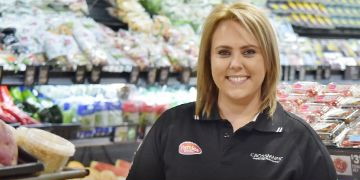





As a trusted strategic retail partner, we develop tailored and flexible solutions that are completely unique to your business. Our results-driven approach harnesses the latest technology, drawing on retail data analytics and business intelligence (BI) to ensure programs generate optimal results and are created to address the evolving current market conditions.
We work in close partnership with you as an extension of your team. Whatever your business goals or strategy, our team’s retail experience, data-driven approach, and close industry partnerships will ensure we deliver the best outcomes. Our approach is built on the following principles.
Quality, effectiveness and efficiency in service delivery and outcomes achieved.
Live and transparent reporting for true retail visibility, and providing data insights to drive a better ROI to your business.
We treat your business as our own – we grow when you grow. Our entire business is behind yours.
Our values define us and how we treat our clients – with respect, excellence, accountability, collaboration and honour. We’re a diverse business held together by a great team culture, working together as a well-oiled machine.

To help make you the most-informed decision, here are some common questions. More questions? Scroll down, fill out the form and just ask!
A traditional discipline of sales and marketing where teams of people work in the ’field’, which is typically in a retail environment, and could also include areas such as trade channels, commercial buildings, events, and public spaces.
These teams boost inhouse resources by providing merchandisers, salespeople, brand ambassadors, and other specialists. CROSSMARK acts as an extension of your business, becoming your arms and legs to help you achieve your retail field objectives.
Retail and commerce are changing at a very fast pace. Anyone working in retail worth their salt knows how important it is to continuously learn, listen, and look ahead. It’s hard to capture all emerging trends here on this page; the best way to stay up to date with industry developments is to sign up to our blog and read our articles for thought leadership and news or reach out to our team directly by clicking on the ‘contact us’ button below.
We work with clients across all industries and understand the challenges and opportunities in each sector. Our team knows how competitive the industry is and how difficult it can be to optimise your field plans. Above all, we’re specialists in building, training, and managing teams to deliver growth for your business.
First, you need to take a good look at your current sales and marketing strategy and check how it’s ’tracking. Is it delivering the results you want? CROSSMARK’s team can then help you to identify your trigger points and make it easy for you to reach your goals. Fill out the contact us form below and our team will be in touch to have a chat.

The rise of the health-conscious consumer: Australian supermarkets step up to influence healthy choices
By
Polly Yule (MD) & Becky Schrederis (BM) on 30 Dec
From cereal and ice cream to chips and chocolate, the way foods with high fat, salt and sugar (HFSS) are promoted in store is changing.
Read more
What retailers can learn from TikTok to prepare for the metaverse?
By
Andy Kirk - CEO on 28 Nov
While there is no question that virtual reality technology has a long way to go, as computer capabilities become more powerful and less pixilated, and new digital platforms including Web3 infrastructure are launched, the immersive sensory experience will only improve.
Read more
How To Improve Mystery Shop Scores
By
CROSSMARK on 27 Sep
In an age where word of mouth is crucial to a business’s growth, exceptional customer service is a top priority. Mystery shopping continues to be an excellent way to see your business through the eyes of your customers and provide detailed insights on where you can improve.
Read more

Ensuring your field marketing is driving sales after a period of disruption
By
Polly Yule - MD on 6 May
The retail industry in the last two years has navigated through numerous obstacles, from panic buying and out of stocks due to supply chain pressures and labour challenges...
Read more
Building a business case for growth and distribution
By
Patricio Servat - Business Development Manager on 23 Mar
Field sales is essential for building a product’s distribution, volume, and overall growth within independent retail channels, however in today’s highly competitive environment field representatives are expected to...
Read more
Leveraging our ecommerce & logistics capabilities to help clients grow online
By
Con Botsioulis - Client Service Director on 15 Feb
The shift in shopper behaviour means it has never been more important for brands to maximise their online visibility...
Read more
The Keys to planning a successful Black Friday Sales Campaign
By
Anthony Di Francesco - Client Service Director on 3 Nov
Anthony shares the secrets of planning a Successful Black Friday sales campaign and what you can do to create exciting offers that will appeal to customers once stores open their doors.
Read more