The brands gaining ground in Australian retail share a common characteristic: they are running their field programmes on real data, in real time, and using it to make decisions that their competitors are still making on instinct.
Field reporting has become one of the most significant differentiators in retail execution. Whether a brand runs its own internal field team or works with an outsourced agency, the quality of the data being captured in stores, and what happens with it once it is collected, determines whether a field investment generates meaningful commercial returns or simply produces activity without accountability.
In 2025, there is no excuse for operating on incomplete or delayed field data. The technology exists to deliver real-time, store-level visibility across a national footprint. The question for many brands is not whether better data is available, but whether they are demanding it from their current field arrangements.
Data transparency as the foundation
Effective field reporting starts with a live and transparent view of national performance. Every store visit, every compliance check, every sales interaction should be captured and accessible in a system that allows stakeholders to see what is happening across their entire network as it happens. This is not a luxury capability. It is the baseline from which everything else follows.
Brands that are relying on weekly summary reports or aggregated data from their agency partners are making decisions with information that is already out of date. By the time an out-of-stock issue or a compliance gap appears in a scheduled report, the sales opportunity it represents has already been lost.
The right metrics, consistently applied
Data quality depends on measurement consistency. KPIs that are clearly defined, universally applied across all field activities, and reviewed regularly against business objectives provide a reliable foundation for performance management. Vague or inconsistently applied metrics produce data that is difficult to act on and easy to dismiss.
For brands with complex channel mixes, this means having reporting frameworks that can surface meaningful comparisons across different store formats, geographic regions, and banner groups without requiring significant manual analysis.
Accuracy is non-negotiable
Incomplete, inaccurate, or inconsistent data does not just limit insight. It actively misleads decision-making. Anomalies between stores, unexplained dips in compliance scores, or gaps in visit coverage can all point to data quality issues that, if left unaddressed, erode confidence in the reporting system and reduce its value to the business.
A strong field agency should have robust data quality controls built into its operating model, with validation processes that flag exceptions and ensure the data being reported reflects what is actually happening in stores.
From data to action
Patricio Servat, Business Development Manager at CROSSMARK, has seen many brands come onboard with strong products but weak field visibility. The pattern is consistent. Once they can see what is actually happening at store level, the priorities shift immediately. They stop guessing where to focus and start directing resources with precision.
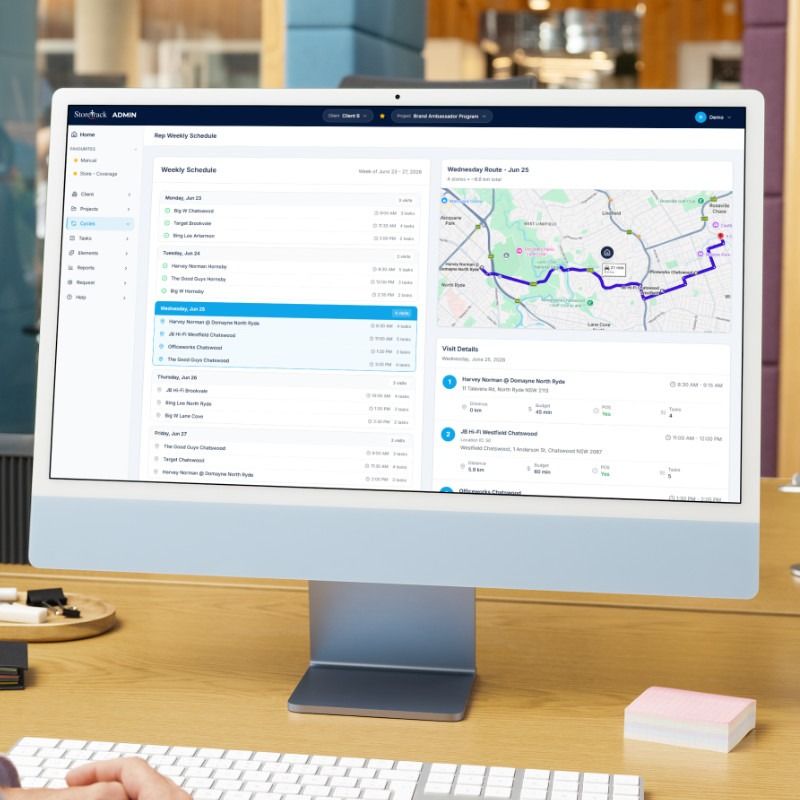
CROSSMARK’s Storetrack platform provides clients with real-time field data, customisable reporting dashboards, and AI-powered analysis capabilities that turn raw field activity into actionable commercial intelligence. If your current field reporting is not giving you this level of visibility, it is worth asking what insight you are missing and what it is costing you.