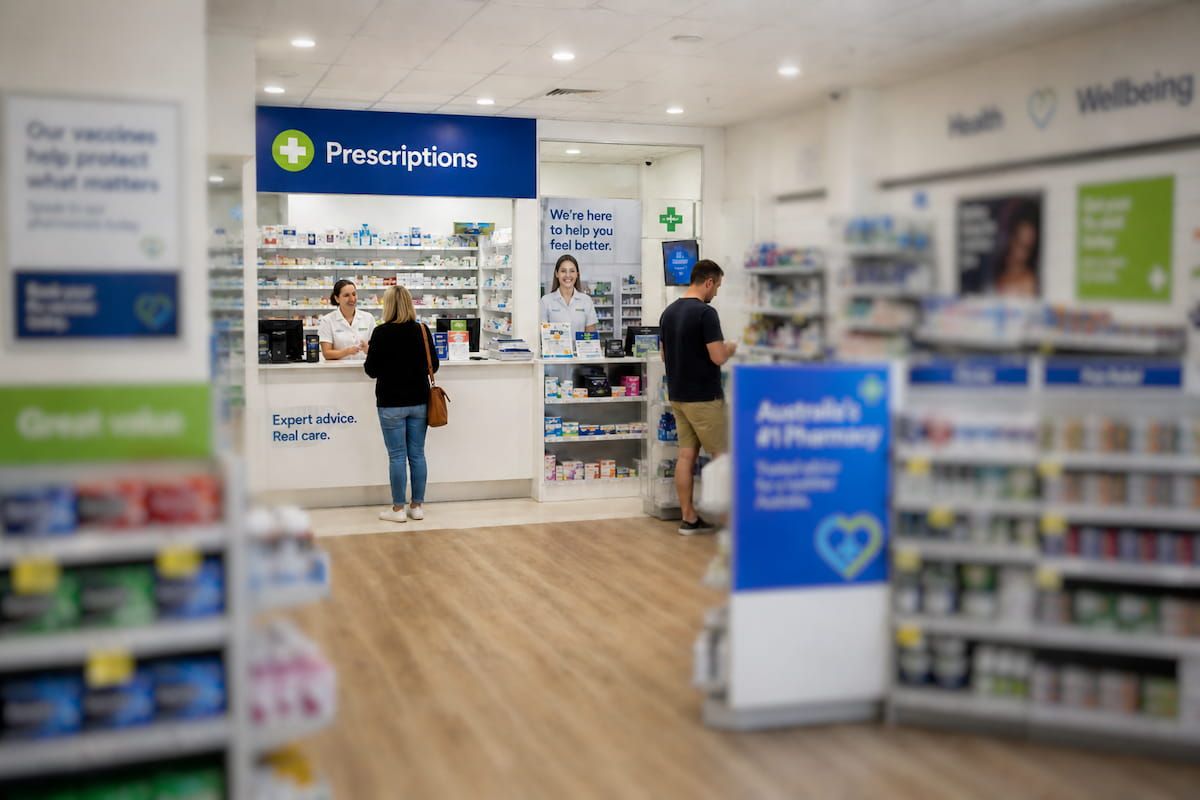
The way Australians shop for health, wellness, beauty and personal care has moved on, and the retail side of the channel has moved with it.
This article is focused on that retail side of pharmacy with front-of-shop categories, supplier activity, shopper behaviour, promotional execution, and the commercial levers that influence performance.
Community pharmacy also plays a critical healthcare and primary care role, and that responsibility remains central to the sector. The point here is that pharmacy now operates as both a trusted health destination and a highly competitive retail environment.
The old model was relatively simple – scripts at the back, personal care at the front, and strong local relationships holding much of it together. Those fundamentals still matter. They now sit inside a more sophisticated market.
Chemist Warehouse strengthened its position early last year, creating a bigger, more integrated pharmacy and wholesale ecosystem. At the same time groups such as Priceline, TWCM, Amcal, and independent pharmacy networks are sharpening their propositions in different ways. Some are leaning into price and scale. Others are building around advice, services, beauty, convenience, loyalty or local community connection.
The result is a channel that behaves far more like modern FMCG retail than traditional pharmacy retail. For suppliers, that changes the game.
Pharmacy is also a retail channel
Getting ranged is important, but it is only the start. The real battle is what happens after the ranging decision – whether the product is on shelf, whether the ticket is right, whether the promotion is executed, whether staff understand the offer, whether shoppers can find it, and whether the brand shows up consistently across stores.
FMCG brands have lived with this reality for decades. They know sales are won and lost at store level. A strong head office presentation means very little if the display is not built, the shelf is empty, or the shopper cannot understand the range.
Pharmacy is now facing the same challenge. As banners become more sophisticated and more decisions are made centrally, execution becomes even more important. A national agreement does not guarantee national compliance. A strong product story does not guarantee visibility. A catalogue feature does not guarantee availability. The brands that win will be the ones that close the gap between strategy and store reality.
Value means more than price
Australian shoppers are still cautious. Even as retail conditions improve, people are making more deliberate choices about where they spend. They are comparing prices, waiting for deals, trading down in some categories and still paying more in others when the value is clear. Retailers are also investing more in omnichannel, data and personalisation as shopper expectations rise.
That is familiar territory for FMCG and the lesson for pharmacy is to resist just discounting harder. Understand what value means in each category. In pain relief, value may mean trust and immediate availability. In vitamins, it may mean pack size, format or promotional depth. In skincare, it may mean efficacy and credibility. In baby care, it may mean reassurance. In beauty, it may mean discovery and confidence.
FMCG has learned to be more disciplined than that. Price matters but so do pack architecture, shelf layout, claims hierarchy, education, navigation and promotional timing. A shopper will pay more when they understand why. They will switch quickly when they do not.
Pharmacy needs stronger category thinking
One of the strongest FMCG disciplines pharmacy can borrow is category management. Pharmacy shelves are often full, but not always easy to shop. In many categories, the shopper is either overwhelmed by choice or under-supported in making a decision. That matters because pharmacy products are not always simple, and the shopper may be buying under stress, discomfort, or time pressure.
Good category thinking starts with the shopper mission:
- Why is the shopper here?
- What problem are they trying to solve?
- What do they already know?
- What needs to be explained?
- What should sit together?
A customer shopping for immune support, sleep, digestion, skincare, pain management or baby health is looking for confidence. The easier the category is to navigate, the more likely they are to buy well, buy again and trust the store.
Brands can play a more useful role here. More facings alone will rarely solve the problem. Clearer category flows, better adjacencies, stronger education and simpler shelf communication will.
Field teams should be insight engines
In a more competitive pharmacy environment, field teams need to do more than merchandise. Yes the basics still matter – checking stock, building displays, fixing tickets, implementing planograms, and supporting promotions. The bigger value comes from what field teams see and learn in store.
- What is happening on shelf?
- Which stores are executing well?
- Where is stock sitting out the back?
- Which competitor has taken space?
- What are pharmacy assistants saying?
- Which promotions are cutting through?
- Which regional locations need more support?
The best teams capture insight, identify opportunities, and both quantitative and qualitative data. And all that should be delivered live and transparently to make better decisions on where to invest, where to pull back, where to support a retailer, and where the issue is operational rather than strategic.
Digital activity has to connect to the shelf
Pharmacy is becoming more omnichannel, with more focus on loyalty, ecommerce, retail media and digital engagement which makes store execution even more important.
If a brand invests in retail media, loyalty offers, paid search, social campaigns, or catalogue activity, the product needs to be ready when demand lands. That means the right stores, the right stock weight, the right shelf presence, the right price and the right staff awareness.
Trust is still pharmacy’s advantage
Pharmacy has something supermarkets and online marketplaces find hard to replicate: trust.
Pharmacists and pharmacy teams still influence shopper decisions, particularly in health-led categories where people want reassurance. As pharmacists take on a broader role in consultations, vaccinations, everyday health services, and expanded scope of practice, the front-of-shop offer should complement that professional role.
Brands have a responsibility here – product education should be clear, compliant, and useful. Claims should be easy to understand. Staff training should help pharmacy teams have better conversations with customers.
Pharmacy can learn a lot from FMCG: shopper understanding, availability, category flow, promotional execution, field insight, value architecture and speed to market.
The best pharmacy brands need to do the same, while respecting the clinical context of the channel.